
Sokoto State northwest Nigeria had been one of the states in the eye of the storm of insecurity, specifically the nefarious activities of bandits who, before now, have visited a reign of terror on the people, mostly villagers, kidnapping for ransom, rustling cattle and carting away just any valuables in addition to levying communities for hush or protection money.
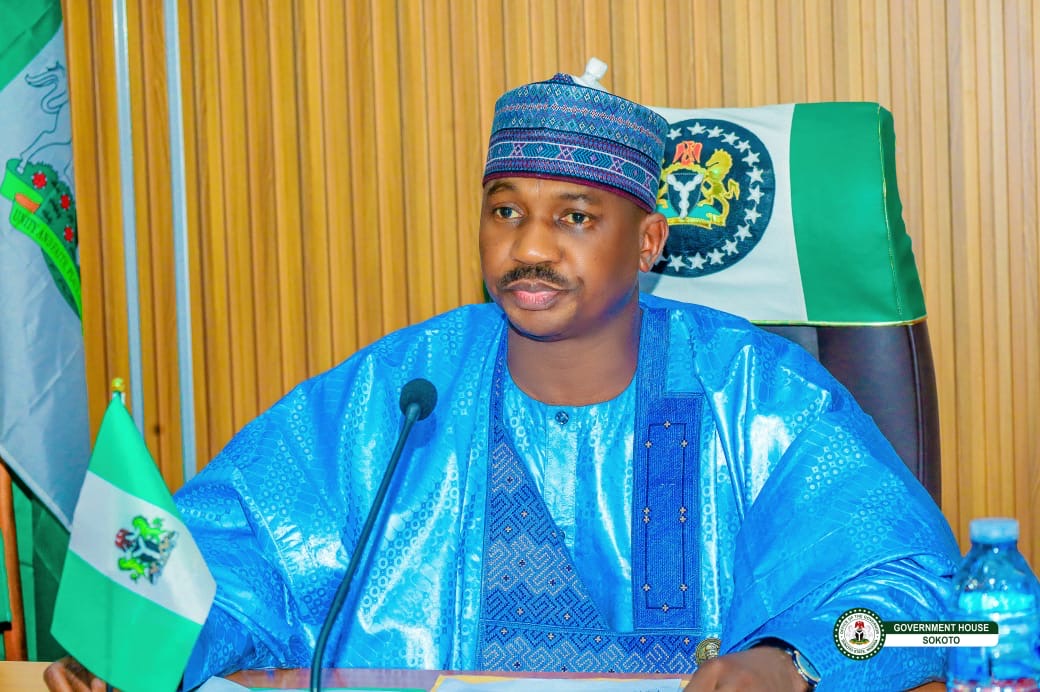
Well, that situation has abated substantially and it's all thanks to the deliberate and resolute investment of Gov. Ahmed Aliyu on both the welfare, and logistics of the security agencies operating in Sokoto state. This ranges from operational/logistics vehicles, to improved welfare packages all of which combine to boost the morale of troops in the frontline.
It was therefore, in keeping faith with this mandate that the Sokoto state government recently approved the procurement of 30 security operational vehicles at the cost of N1.59bn. This was of course towards the support of security agencies in the state in their fight against banditry and other criminal activities.
Since coming on board, the state government under governor Ahmed Aliyu has been steadfast in its support for security agencies and the procurement of vehicles to aid logistics has been one constant feature. In a little under four years, over 200 patrol vehicles and 62 armoured vehicles have so far been procured and distributed to security agencies in the state to strengthen the operational efficiency of security agencies to sustain the war against banditry and other criminals. But the vehicles are only one part of the story.
From the beginning of the administration, there has been a deliberate attempt to address the mobility gap that has often weakened the ability of security agencies to respond quickly to attacks in remote communities. The administration also established the Sokoto State Community Guard Corps - a community level security initiative - and began equipping it for operations in the 13 local government areas most affected by banditry.
The Community Guard Corps is important because of the peculiar nature of the insecurity in Sokoto. Bandits do not operate only around urban centres where conventional security formations are readily available. They operate in difficult rural terrain, villages and farming communities where response time can make the difference between preventing an attack and arriving after the damage has been done. The state therefore provided the corps with vehicles and motorcycles, while also providing office accommodation at the state and local government levels.
By September 2024, 20 Hilux vans and 710 motorcycles had been handed over to the Community Guard Corps for deployment across the affected local government areas. The intervention was designed to allow the community guards to penetrate areas where conventional security agencies may not immediately reach, while complementing rather than replacing the conventional security architecture.
That same thinking has continued to define the administration's security policy.
In 2025, the government procured and distributed 140 patrol vehicles to security agencies and increased allowances for personnel deployed to high-risk areas. It also upgraded the DSS tracker system to 5G technology, provided motorcycles to DSS operatives, and pursued the construction of a military base in Illela Local Government Area as part of efforts to deepen security presence in frontline areas.
There was also the effort that were put into operationalising an Air Force base in Sokoto. This is significant because the fight against banditry in the North West is increasingly dependent on intelligence, surveillance, mobility and the capacity to move quickly between communities and difficult terrains.
The restoration and upward review of allowances for security personnel deployed to volatile areas is another aspect that deserves attention. It may not make as much noise as the commissioning of a new vehicle, but it matters. Security personnel who are deployed for prolonged periods in difficult and dangerous locations need more than equipment; their welfare affects morale and operational effectiveness.
The governor has equally placed considerable emphasis on intelligence gathering and information sharing. In his 2026 security blueprint, he specifically identified logistics, intelligence gathering and intelligence sharing as areas in which the state intends to strengthen its support for security agencies. This is perhaps one of the more important shifts in the administration's approach because banditry cannot be effectively confronted by waiting for criminals to attack before responding.
The government has therefore repeatedly called on residents, particularly those in rural communities, to report suspicious movements and persons to security agencies. In September 2025, Governor Aliyu specifically identified the activities of informants as a major concern and directed security agencies to deal with those aiding bandits. He also called on Imams and community leaders to sensitise their followers against providing support to criminal elements.
The policy direction is clear; the administration sees security as something that must be fought from both ends, through the deployment of men and hardware and through the disruption of the local information and support networks that make banditry possible.
The administration has also continued to support communities affected by attacks. Following the Silame attack in 2025, for instance, families of the 33 victims were given N2 million each, alongside food items. Such interventions will not stop a bandit attack, but they provide immediate relief to families that have lost breadwinners and demonstrate that government intervention does not end with the deployment of security personnel.
More importantly, the government has continued to connect security with development. A community cannot truly be considered secure if its people cannot farm, trade, travel to markets or return to their ancestral homes.
The broader infrastructure programme therefore becomes part of the security conversation. Roads, health facilities, schools, water projects and other public infrastructure improve government presence and make it easier for people and legitimate economic activities to return to communities that had been weakened by insecurity. The administration has equally pursued youth empowerment and initiatives such as the Neighbourhood Initiative and Sokoto Marshall, designed to provide productive engagements while supporting conventional security structures in areas such as traffic regulation, fire control and community management.
The most important point, however, is that the administration has not treated security as a one-off project. The pattern since 2023 has been one of continuous intervention; vehicles, motorcycles, allowances, community guards, intelligence support, military infrastructure and, more recently, armoured vehicles and another 1,000 motorcycles.
In July 2026, the state government again provided operational vehicles to security agencies, while in August it approved N1.759 billion for 1,000 Bajaj motorcycles to complement the 62 armoured vehicles valued at N27 billion.
And just this week, Governor Aliyu again stated that the fight would continue until displaced persons are able to return to their ancestral homes, pointing to recent operations in Rabah, Tureta and Kebbe where security agencies rescued captives and recovered thousands of rustled livestock.
That is not to say that Sokoto is now free of banditry. It isn't. Recent reports of attacks, abductions and renewed threats in parts of the state are a reminder that the problem remains. What is however difficult to ignore is the consistency of the investment.
For an administration operating within a constitutional framework in which the military and police remain federal institutions, Sokoto has chosen to put its resources behind the agencies that are constitutionally responsible for security while building complementary grassroots structures around them.
And perhaps that is the real story of Governor Ahmed Aliyu's security policy in Sokoto; not that banditry has disappeared, but that the state has continued to invest in the men, equipment, intelligence, infrastructure and community structures required to keep pushing the criminals back and create the conditions for normal life to return to the affected communities.
Sale writes from Sokoto